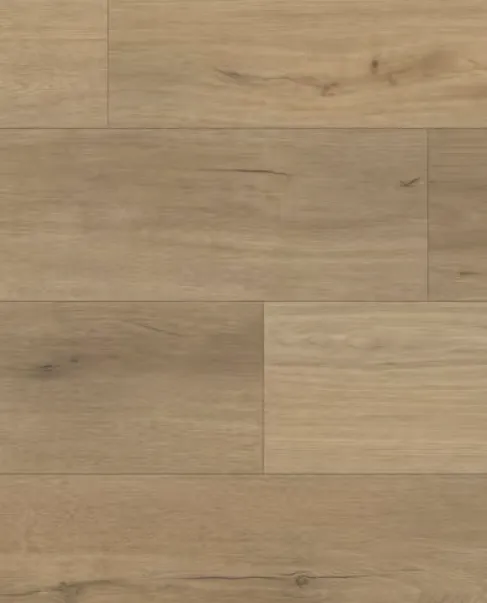
Premium retail flooring installation showcasing how flooring design reinforces brand identity
When you walk into a retail store, you probably don't think much about the floor beneath your feet. But here's a surprising fact: 62% to 90% of consumers subconsciously judge a retail environment based on its appearance within the first 90 seconds—and flooring plays a massive role in that first impression.
For retail business owners in Phoenix and Scottsdale, your flooring isn't just a surface to walk on—it's a powerful, often underestimated tool that can influence customer behavior, reinforce your brand identity, and ultimately drive sales. In this comprehensive guide, we'll explore the psychology behind retail flooring and provide actionable insights to help you make smarter flooring decisions for your business.
What You'll Learn
- • The psychology of how flooring affects customer behavior
- • How different flooring materials influence brand perception
- • Strategic flooring techniques to guide customer flow
- • The connection between flooring and dwell time
- • Color psychology in retail flooring design
- • Best flooring options for different retail environments
- • Real-world examples and case studies
The Psychology of Retail Flooring: Why It Matters More Than You Think
The retail store flooring underfoot can trigger subconscious psychological responses in customers, influencing their mood, perception of your brand, and even their physical behavior within your space. According to research from ArchDaily, color amplifies brand recognition by an impressive 80%—and this extends directly to your flooring choices.
"The human brain was not designed to navigate the retail environment. But the retail environment has been carefully crafted to navigate the peculiarities of the human brain."
— Cestrian, Visual Brand Communications
Four Key Psychological Impacts of Retail Flooring
1. Perception of Value
High-end materials like polished concrete or hardwood suggest a premium brand, while budget-friendly options may align with discount retailers. Customers subconsciously adjust their price expectations based on flooring quality.
2. Mood and Comfort
Softer surfaces like carpet encourage lingering, while harder surfaces suggest efficiency. The tactile experience underfoot directly affects how long customers want to stay.
3. Navigation and Flow
Changes in flooring type or pattern can subtly guide customers through your store, highlighting specific departments and influencing their shopping path.
4. Brand Identity
Natural wood suits eco-conscious brands, sleek epoxy aligns with tech retailers, and marble conveys luxury. Your flooring should tell your brand story.
Watch: The Modern Retail Experience
How leading retailers are creating next-level in-store experiences through design
How Different Flooring Types Influence Customer Behavior
The material, color, pattern, and texture of your retail flooring each play a distinct role in shaping consumer behavior. Here's how the most popular commercial flooring options impact your customers:
Hardwood Flooring
Impact: Conveys quality, warmth, and sophistication. Encourages a more leisurely browsing pace and is often associated with higher-end retailers.
Behavioral Cues: Customers perceive the store as more upscale and are more willing to consider higher-priced items. The natural beauty creates a more inviting atmosphere.
Best For: Boutique clothing stores, jewelry shops, high-end home goods, specialty retailers
Polished Concrete
Impact: Offers a contemporary, industrial, and minimalist aesthetic. Highly durable and easy to maintain.
Behavioral Cues: Appeals to younger, trendier demographics. Suggests a no-fuss, straightforward shopping experience. Stained concrete can add visual interest and define zones.
Best For: Tech stores, athletic retailers, modern furniture showrooms, art galleries
Luxury Vinyl Tile (LVT)
Impact: Highly versatile, offering styles that mimic wood, tile, or stone at a lower cost. Durable and easy to maintain.
Behavioral Cues: Wood-look vinyl evokes warmth, while tile-look suggests cleanliness. Its practicality appeals to budget-conscious shoppers without sacrificing aesthetics.
Best For: Supermarkets, department stores, pharmacies, quick-service restaurants
Tile Flooring (Ceramic, Porcelain, Stone)
Impact: Projects durability, cleanliness, and permanence. Can create distinct zones through variations in color, size, and pattern.
Behavioral Cues: Suggests a modern, efficient, or artistic environment. Different patterns can subtly direct foot traffic through your space.
Best For: Luxury boutiques, spas, cosmetics stores, high-traffic retail entrances
Commercial Carpet
Impact: Creates warmth, comfort, and sound absorption. Encourages customers to linger longer in specific departments.
Behavioral Cues: Promotes a more relaxed and intimate shopping experience. Makes customers feel at ease and willing to browse longer.
Best For: Fitting rooms, home goods sections, bookstores, apparel departments
The Dwell Time Connection: How Flooring Keeps Customers Shopping Longer
Dwell time—the amount of time customers spend in your store—is one of the most critical metrics in retail. According to Shopify's retail analytics research, customers who stay longer are significantly more likely to make a purchase.
Why Dwell Time Matters
- →Customer Engagement: Longer dwell time indicates customers enjoy spending time in your store and are engaged with your products.
- →Sales Potential: More time browsing means more opportunities to discover products and make purchasing decisions.
- →Customer Experience: High dwell time signals a positive shopping experience that leads to repeat visits.
How Flooring Increases Dwell Time
Studies show that a comfortable and visually appealing shopping environment encourages customers to stay longer. Here's how strategic flooring choices contribute:
- 1Comfort underfoot: Soft, cushioned flooring in fitting rooms and browsing areas reduces fatigue and encourages longer visits.
- 2Visual appeal: Attractive flooring creates a pleasant atmosphere that customers want to spend time in.
- 3Acoustic comfort: Flooring that absorbs sound (like carpet) creates a more relaxed environment compared to hard, echoey surfaces.
- 4Temperature regulation: In Arizona's hot climate, cool tile or polished concrete can provide welcome relief from the heat.
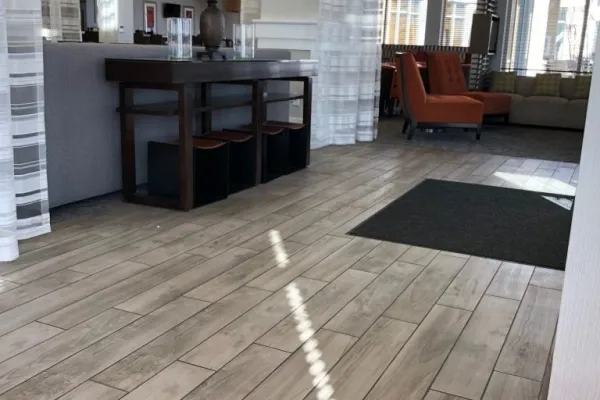
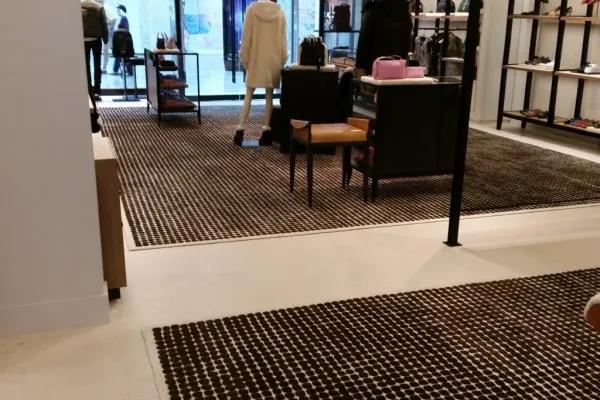
Strategic flooring transitions help define different zones and guide customer flow
Strategic Flooring Techniques to Guide Customer Behavior
Beyond material selection, the strategic application of flooring can actively shape how customers move through and interact with your space:
Defining Zones
Use different flooring types or patterns to clearly delineate departments or areas. For example, carpet in a fitting room area creates intimacy compared to tile in the main walkway.
Guiding Foot Traffic
Changes in flooring color, texture, or pattern can subtly guide customers along a desired path, leading them past key product displays and promotions.
Highlighting Key Areas
Visually distinct flooring in specific areas draws attention to featured products or special offers. Contrasting colors create natural focal points.
Creating Smooth Transitions
Seamless transitions between different flooring types maintain a comfortable shopping experience. Abrupt changes can be jarring and disrupt customer flow.
Watch: Store Layout, Design & Visual Merchandising
Understanding how store design elements work together to influence customer behavior
Color Psychology in Retail Flooring
Colors possess an innate capability to capture attention and evoke emotions—a trait that proves invaluable in retail design. Here's how different flooring colors influence customer behavior:
Warm Tones (Red, Orange, Yellow)
Create urgency and excitement. Red is particularly effective for sales areas and impulse purchase zones. Warm tones at entrances extend a cordial invitation.
Cool Tones (Blue, Green, Gray)
Create a tranquil environment that encourages prolonged browsing. Blue promotes trust and relaxation, making it ideal for high-consideration purchases.
Natural Wood Tones
Evoke warmth, authenticity, and quality. Perfect for brands emphasizing craftsmanship, sustainability, or premium positioning.
Neutral Tones (White, Beige, Gray)
Suggest dependability and allow products to stand out. Preferred by older demographics and effective in letting merchandise be the focal point.
Pro Tip: Employing warm shades within waiting zones manipulates customers' perception of time—they feel more at ease and stay longer, encouraging exploration before making a purchase.
Reinforcing Brand Identity Through Flooring
Your commercial retail flooring should align seamlessly with your store's brand identity. The consistent application of specific colors and materials within your retail setting cultivates brand recognition and customer loyalty. Research from the National Retail Federation confirms that cohesive store design directly impacts repeat customer rates.
Flooring Choices by Brand Personality
- Luxury Boutique: High-end hardwood or marble flooring enhances an upscale image
- Trendy Apparel: Bold, patterned vinyl or polished concrete for a contemporary look
- Eco-Conscious Brand: Sustainable materials like bamboo or reclaimed wood
- Tech Retailer: Sleek epoxy or polished concrete for a modern, innovative feel
- Family-Friendly Store: Durable, easy-clean LVT with warm, inviting tones
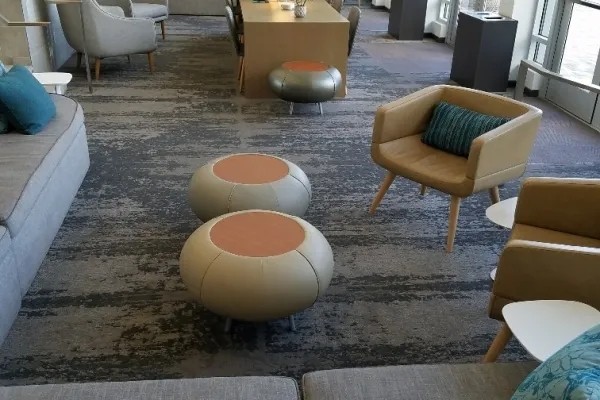
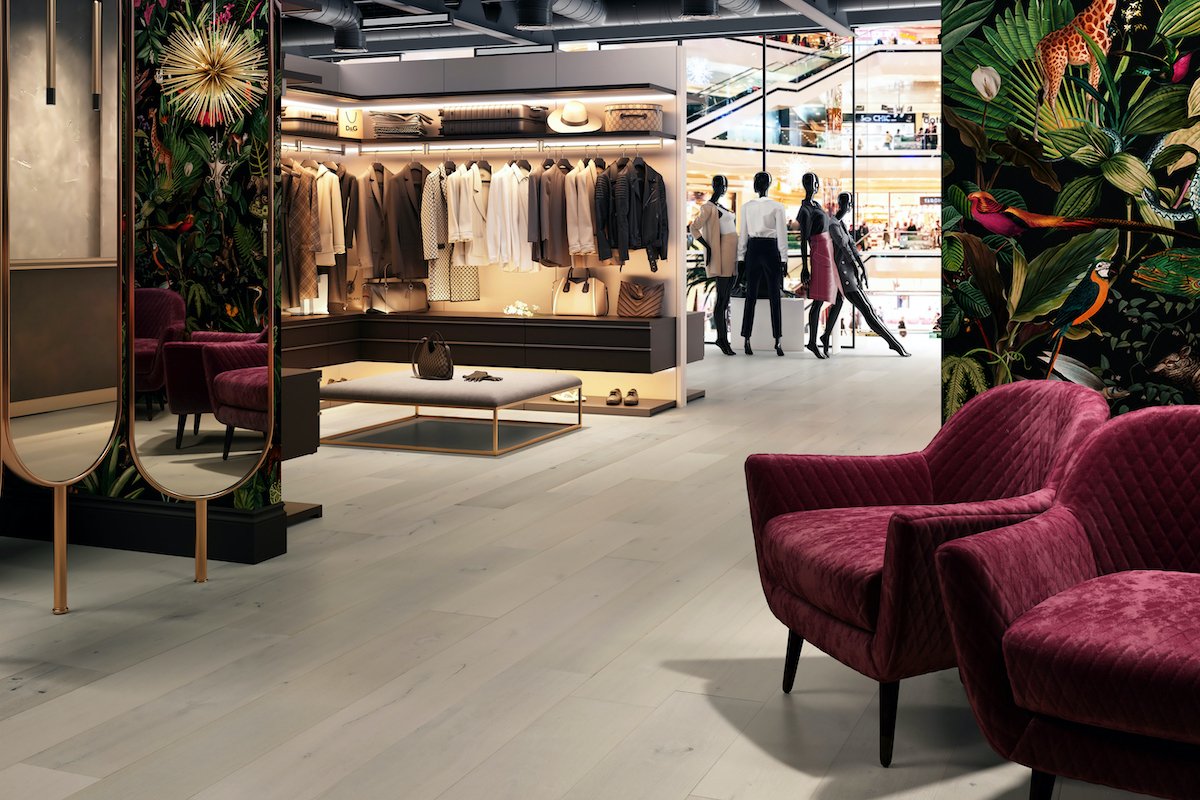
Flooring design that reinforces brand identity while maintaining durability for high-traffic areas
The ROI of Quality Retail Flooring
Investing in high-quality commercial retail flooring is a smart business decision that pays dividends in multiple ways:
Increase in brand recognition through consistent color application
Years of lifespan for quality hardwood with proper maintenance
Time for customers to form first impressions of your space
Long-Term Value Considerations
- ✓Reduced Maintenance Costs: Durable materials like LVT, epoxy-coated concrete, and commercial-grade carpet tiles require less maintenance and withstand years of wear.
- ✓Increased Customer Satisfaction: A well-designed floor contributes to positive shopping experiences that drive repeat business.
- ✓Enhanced Safety: Slip-resistant flooring reduces liability and ensures customer confidence.
- ✓Flexibility for Rebranding: LVT and hardwood come in varieties that can easily match evolving brand aesthetics.
Watch: How to Choose the Perfect Retail Flooring
Expert guidance on selecting retail flooring that balances hygiene, style, and durability
Retail Flooring Considerations for Phoenix & Scottsdale
Arizona's unique desert climate presents specific challenges and opportunities for retail flooring:
Arizona-Specific Factors
- Heat Management: Tile and polished concrete stay naturally cool, providing relief from Arizona's intense heat and potentially reducing cooling costs.
- Low Humidity: Engineered hardwood performs better than solid hardwood in Arizona's dry climate, resisting warping and gaps.
- Sun Exposure: UV-resistant flooring options prevent fading in sun-drenched storefronts.
- Dust and Sand: Easy-to-clean surfaces like LVT and polished concrete handle the inevitable desert dust tracked in by customers.
- Monsoon Season: Water-resistant options near entrances protect against sudden moisture during monsoon storms.
Frequently Asked Questions
What is the best flooring for retail stores?
The best flooring for retail stores depends on your brand identity and foot traffic. Luxury Vinyl Tile (LVT) is the most popular choice due to its durability, design versatility, and easy maintenance. Hardwood conveys premium quality, polished concrete suits modern aesthetics, and commercial carpet works well in fitting rooms and boutiques.
How does flooring affect customer behavior in retail?
Flooring affects customer behavior through psychological triggers including perception of value, comfort levels, navigation cues, and brand identity reinforcement. Studies show 62-90% of consumers judge retail environments within 90 seconds, and flooring plays a major role in that first impression. Strategic flooring choices can increase dwell time and conversion rates.
What flooring increases retail dwell time?
Comfortable flooring like commercial carpet and cushioned LVT increases dwell time by reducing foot fatigue. Warm-toned flooring creates inviting atmospheres that encourage browsing. Sound-absorbing materials create relaxed environments. In Arizona, cool surfaces like tile and polished concrete provide relief from heat, encouraging customers to stay longer.
How much does commercial retail flooring cost in Phoenix?
Commercial retail flooring in Phoenix typically ranges from $3-$12 per square foot for materials, plus $2-$6 for installation. LVT costs $4-$8/sq ft installed, commercial carpet $3-$7/sq ft, hardwood $8-$15/sq ft, and polished concrete $3-$8/sq ft. Contact ABS Floor Covering at 602-415-1919 for a free quote tailored to your project.
What flooring is best for Arizona's climate in retail stores?
For Arizona's hot, dry climate, tile, polished concrete, and LVT are excellent choices. They stay cool underfoot, resist UV fading, handle low humidity without warping, and are easy to clean from desert dust. Engineered hardwood outperforms solid hardwood in Arizona's conditions. Water-resistant options near entrances protect against monsoon moisture.
Flooring Is Your Silent Salesperson
Your retail store flooring is a powerful, often underestimated element of your store's design. By carefully considering the psychological impact of different materials, the strategic use of patterns and zoning, and the overall sensory experience, you can choose flooring that not only looks appealing but also subtly influences customer behavior in ways that benefit your business.
Investing in the right retail flooring is an investment in creating a more engaging, comfortable, and ultimately, more profitable shopping environment. Whether you're opening a new retail location in Phoenix or renovating an existing Scottsdale storefront, the flooring decisions you make today will impact your customer experience and sales for years to come.
About the Author
ABS Floor Covering Team
With over 100 years of combined experience in commercial flooring, the ABS Floor Covering team has installed flooring in hundreds of retail locations, hotels, healthcare facilities, and commercial buildings across Phoenix, Scottsdale, and the greater Southwest. Our team includes ICRI-certified moisture testing specialists and experts in LVT, hardwood, tile, polished concrete, and epoxy flooring systems.
Ready to Transform Your Retail Space?
ABS Floor Covering has over 100 years of combined experience helping Phoenix and Scottsdale retailers choose and install the perfect flooring for their business needs.